
How to Plan a Team-Building Activity in Paris for an International Team

Planning a team-building activity in Paris sounds like the enjoyable part of organising a company trip — until the questions begin.
Will everyone understand the instructions? Is the meeting point easy to reach? Will the activity suit colleagues with very different fitness levels? Can it fit between a morning meeting and dinner? And, perhaps most importantly, will people actually enjoy taking part?
For an international team, a successful activity should feel unmistakably Parisian without requiring expert knowledge of the city. It should encourage colleagues to interact naturally, while remaining simple enough for an organiser to coordinate from another country.
Here are the essential points to consider before booking.
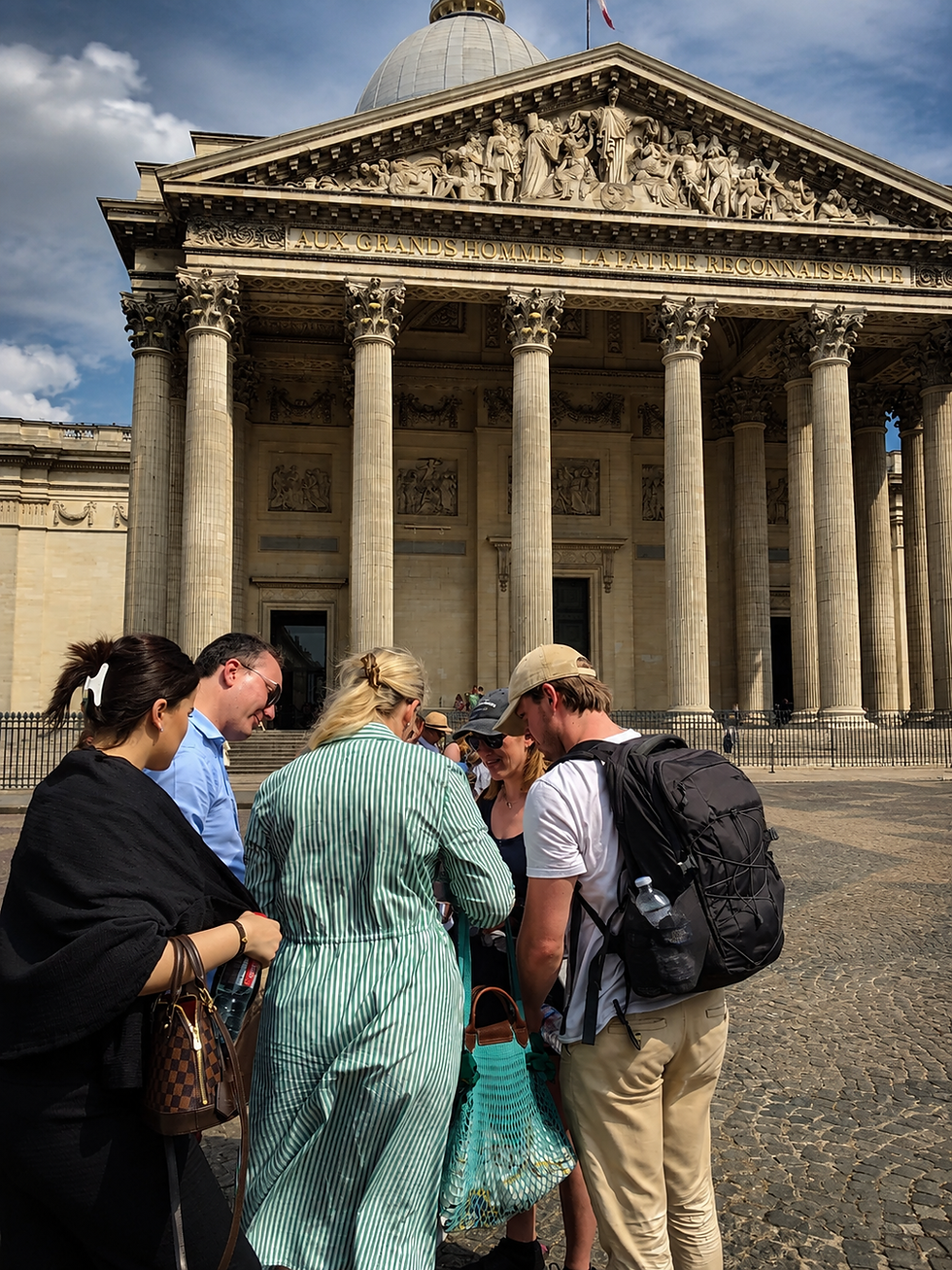
Start with the purpose of the activity team-building activity in Paris
“Team building” can mean several different things. Before comparing activities, decide what the event is expected to achieve.
A newly formed team may need an easy way to start conversations. Colleagues who usually work remotely may simply want to spend time together away from their screens. A group attending a Paris seminar may be looking for an enjoyable break between more formal sessions.
The purpose does not need to sound like a management consultancy report. A clear sentence is enough:
Help colleagues from different offices get to know one another.
Create some friendly competition after a day of meetings.
Discover Paris together without organising a conventional guided tour.
Give the team a shared experience before dinner.
This decision will help determine whether the activity should be collaborative, competitive or simply playful.
For small groups, that choice can remain flexible until the day itself. With 20 participants or more, it is better to agree on the format in advance so that the teams, materials and briefing can be prepared properly.
Choose an activity that works in English
An activity being “available in English” does not necessarily mean that it has been designed for English-speaking participants.
Translated instructions can become confusing when they rely on French wordplay, local cultural references or vocabulary that only fluent speakers will understand. In an international team, levels of English may also vary considerably.
The best format uses clear written instructions, visual observation and puzzles that can be solved collectively. Participants should not need to know Parisian history before they begin. Discovering that history is part of the experience.
A proper welcome and briefing also matter. They give participants an opportunity to ask questions, understand how the game works and start with confidence rather than spending the first twenty minutes deciphering the rules.
Keep the location central
Paris may look compact on a map, but moving a large group across the city can quickly eat into a carefully planned schedule.
A central starting point makes the activity easier to combine with a meeting, lunch or evening event. It also helps colleagues staying in different hotels arrive without complicated transfers.
The Panthéon–Louvre treasure hunt begins in the Latin Quarter and finishes near the Louvre. Over approximately two hours and 3.5 kilometres, teams explore a succession of very different Parisian settings: the Panthéon, the Sorbonne district, the banks of the Seine, Île de la Cité, Pont-Neuf and the arcades of the Palais Royal.
The route takes place outdoors and does not require entrance tickets to the monuments. This avoids queues and makes the timing easier to control — a useful advantage when the activity sits between two fixed appointments.
The finishing area is also well placed for continuing the day with a drink, dinner or another discovery in central Paris.
Be realistic about timing
A two-hour activity requires more than a two-hour space in the schedule.
Participants need time to reach the meeting point, receive their instructions and form teams. At the end, there is a final meeting and debrief before everyone moves on to the next part of the programme.
For a comfortable experience, allow a little breathing room before and after the game. Avoid scheduling the start immediately after a meeting on the other side of Paris, or booking dinner five minutes after the official finishing time.
The most relaxed programmes usually reserve around three hours in total, including arrivals and onward travel. This does not mean that the activity itself becomes longer; it simply prevents Paris traffic, a delayed meeting or one perpetually lost colleague from creating unnecessary stress.
Consider the physical demands
A treasure hunt is active, but it should not feel like a sporting event.
For the Panthéon–Louvre route, participants walk approximately 3.5 kilometres through central Paris. Comfortable shoes are strongly recommended, particularly on cobbled streets. The pace is determined by the team, so there is no need to race unless the competitive spirit takes over.
Before booking, check whether anyone has limited mobility or another requirement that could affect their participation. Parisian pavements, kerbs and historic streets are not equally comfortable for everyone, and it is better to discuss specific needs beforehand.
Weather should also be considered. The activity can take place in different seasons, provided participants arrive with suitable clothing. A light shower is rarely a disaster; an entire team discovering that nobody checked the forecast can be.
Decide how the teams will be formed
Team composition has a surprisingly strong influence on the atmosphere.
Mixing departments, offices or nationalities can encourage new conversations. Keeping close colleagues together may create stronger competition but fewer new connections. If the main purpose is integration, prepared teams are usually more effective than asking everyone to stand beside their favourite colleague.
For larger groups, deciding the teams in advance also saves time at the start. From Paris With Fun can welcome corporate groups from 4 to 50 participants, but the activity is always played in smaller teams so that everyone can contribute.
There is no advantage in creating oversized teams. Once too many people are crowded around the same booklet, the most enthusiastic participants tend to take over while everyone else follows them to the next clue.
Check what is included before comparing prices
Two activities with similar descriptions may require very different levels of organisation from the person booking them.
A From Paris With Fun corporate treasure hunt includes the printed game booklet, the material needed for the challenges, an in-person welcome and briefing, assistance by phone during the activity, and a final challenge and debrief.
The routes already exist and are ready to play. The aim is not to create a bespoke company game, but to offer a carefully designed Paris experience that can be organised without adding another complicated project to the organiser’s workload.
Corporate rates for the Panthéon–Louvre route start at €35 per participant. Quotations and invoicing are suitable for business bookings, and payment can be made by bank transfer or corporate card, including American Express through Stripe.
Planning an activity for an international team in Paris? Discover how our corporate treasure hunts work and tell us about your group.
Send the organiser’s checklist early
Once the activity has been chosen, a short internal message can prevent most last-minute questions. It should include:
The meeting point and arrival time
The approximate duration and finishing area
A reminder to wear comfortable shoes
Advice to check the weather
The team list, if teams have been decided beforehand
A contact number in case someone is delayed
There is no need to reveal the puzzles or turn the email into a rule book. The briefing will explain the game. Participants only need enough information to arrive prepared.
A well-planned team-building activity should make Paris feel accessible rather than complicated. From the steps of the Panthéon to the courtyards of the Palais Royal, the city provides more than a backdrop: it gives colleagues something to notice, discuss and occasionally disagree about.
And once the final riddle has been solved near the Louvre, there are still plenty of Parisian debates left to settle — beginning with where the team should go for a well-earned drink.


Comments